
English| EUR
Suggested for you
More currencies
Choose a language
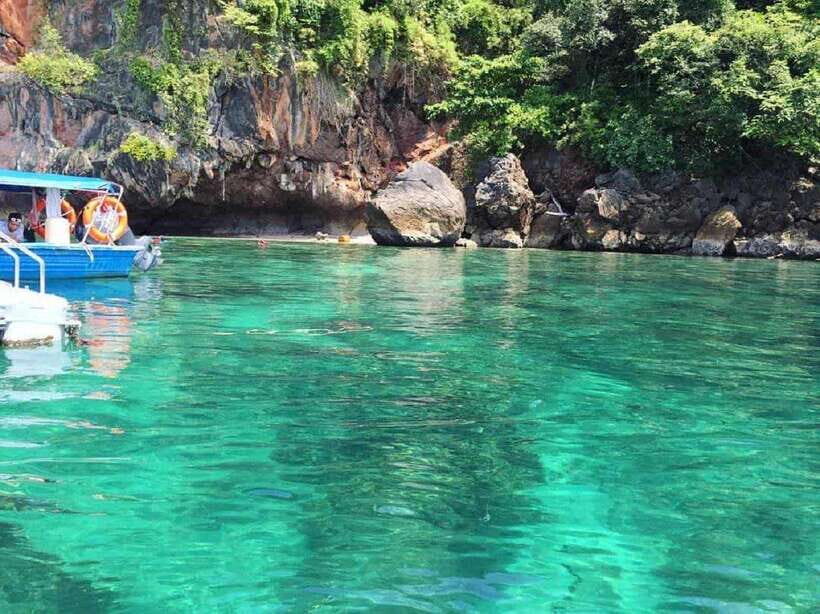
Pulau Dangli sits in sheltered waters off Langkawi's southeastern coast, where coral reefs and shallow bays create calmer conditions than open-sea beaches. This guide covers the marine hazards you might encounter, the months when box jellyfish appear, and how boat-only access shapes the swimming environment around the island.
Quick answer
Yes, it is generally safe to swim around Pulau Dangli during the dry season from November through April, when seas are calm and visibility peaks. The island's location within the Langkawi Geopark offers natural protection from strong currents, though box jellyfish appear occasionally between May and September. Most visitors snorkel in waist- to chest-deep water near coral gardens, where the seabed is visible and boat operators monitor conditions throughout the day.
Pulau Dangli records fewer marine-sting incidents than Langkawi's western beaches, largely because access requires a guided boat tour rather than unsupervised shore entry. Operators brief passengers on current conditions before each snorkeling stop, and most sites sit inside natural lagoons where wave action stays minimal even during afternoon wind shifts. The primary concern when asking is it safe to swim in Langkawi centers on box jellyfish, which drift into the Andaman Sea during the southwest monsoon. Sightings around Pulau Dangli remain sporadic—the island's position near mangrove estuaries creates brackish mixing zones that jellyfish typically avoid—but May through September still warrant caution. Tour operators carry vinegar and monitor water entries during these months. The coral itself poses a secondary risk: fire coral grows along drop-offs at three to five meters, and contact causes immediate welts. Snorkelers who stay within the marked shallow zones, where soft corals and sea grass dominate, rarely encounter stinging species. Coral cuts and sea-urchin punctures account for most first-aid calls. The reef surrounding Pulau Dangli remains alive and sharp; anyone who misjudges depth or gets pushed by surge can scrape hands or knees on branching staghorn formations. Wearing a rash guard and reef-safe footwear reduces this risk to near zero. Water visibility ranges from eight to fifteen meters during the optimal window of 09:00 to 16:00, giving swimmers clear sightlines to navigate around obstacles. Surface currents rarely exceed half a knot in the bays, but the channel between Pulau Dangli and the neighboring islet can pull at one knot during tidal exchanges—boat crews mark this zone off-limits. Langkawi ocean safety improves significantly with a guide. Solo swimming is not permitted at Pulau Dangli; every visitor arrives and departs by chartered boat, and crew members remain on the water throughout snorkeling sessions. This supervised model, combined with the island's naturally sheltered topography, keeps incident rates low. The seabed slopes gently from shore to reef edge, with no sudden drop-offs in the designated snorkel zones, so even less confident swimmers can explore waist-deep flats where parrotfish and butterflyfish congregate. Lifejackets are standard issue on every tour, and operators will not proceed if wind speeds exceed safety thresholds.
“Pulau Dangli's supervised boat-only access and naturally sheltered bays create swimming conditions calmer than most of Langkawi's shore-entry beaches.”
The safest window for swimming and snorkeling at Pulau Dangli is between 09:00 and 16:00. This timeframe provides optimal daylight for underwater visibility while allowing visitors to depart before late afternoon weather shifts occur.
Clear skies, 30°C–32°C
Stable conditions are frequent during these months.
Occasional rain, 28°C–30°C
Expect brief, heavy showers; check forecasts daily.
—
Lower boat traffic offers calmer water conditions.
Verdict: The best time to visit is during the dry season between 09:00 and 16:00 to maximize visibility and avoid afternoon weather changes.
Swimming at Pulau Dangli requires proper safety gear and advance planning since the island is only accessible by private boat tour.
Everything you need to know about is it safe to swim in langkawi
Pulau Dangli is generally a popular location for snorkeling and swimming, provided that you follow standard water safety protocols. When considering is it safe to swim in langkawi, it is important to be aware of local sea conditions and follow guidance from your boat operator.
While snorkeling, you may encounter local marine life, but encounters with dangerous animals are rare. Visitors often ask if it safe to swim in langkawi, and the best practice is to avoid touching coral or disturbing marine creatures to keep the environment safe for everyone.
For beginners, swimming is considered manageable, though you should always use proper safety gear such as life jackets. If you are questioning is it safe to swim in langkawi, ensure you stay close to your designated tour boat and do not stray into deep or turbulent water.
While the island remains accessible, checking weather forecasts is crucial for your safety. Regardless of whether it is safe to swim in langkawi, water visibility and currents can change rapidly during monsoon transitions.
Pulau Payar Snorkeling Guide
Read more GuideBest Snorkeling Spots in Langkawi
Read more GuideSnorkeling at Pantai Cenang
Read more GuideTop Langkawi Snorkeling Beaches
Read more Tickets & toursLangkawi Snorkeling Packages & Prices
Read more Tickets & toursPrivate Snorkeling Tours in Langkawi
Read more